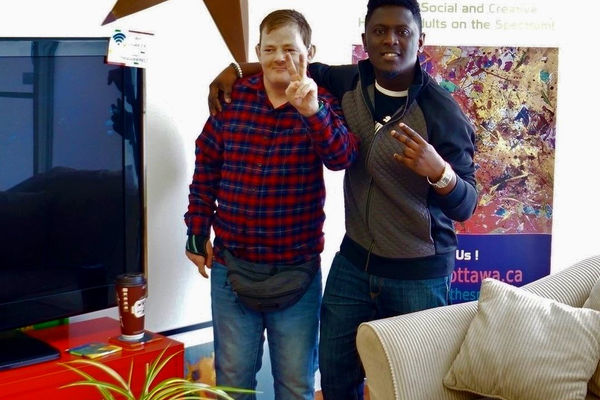
Members of the MWH team meet with other self-advocates to find out, What is most important in your life? The question was posed at theSpace studio in Ottawa, where a group of community members came together for a pop-up event that brought the documentary project directly into contact with the wider self-advocacy community.
Self-advocacy in Ottawa's disability community
Self-advocacy is a movement built on a fundamental premise: people with intellectual disabilities are the authorities on their own lives and have the right to speak for themselves, make their own decisions, and participate fully in their communities. In Canada, organisations like People First of Canada have championed this principle for decades, helping to shift the framing of disability from a problem to be managed to a matter of rights to be upheld.
In Ottawa, the self-advocacy community is active and connected. The pop-up at theSpace was an opportunity to tap into that network — not to recruit participants for the MWH project, but to gather community voices that could become part of the documentary's broader context. The question "What is most important in your life?" was chosen because it is open enough to allow genuine answers while also reflecting directly on what institutions historically denied: the freedom to pursue what you value.
Who came through the door
The event brought together a range of voices from across Ottawa's self-advocacy community. Those who participated included:
- Dominic L'Heureux
- Robert Lamoureux
- Andy Golden
- Stéphane Boulanger and Sam Auguste
- Erin Delmage and Heather Kidd
- Gérard Robillard and Linda Charette
- Jessie Huggett
A heartfelt thank you to all who came and to theSpace for providing the studio.
What people said
The answers to "What is most important in your life?" varied in their specifics but pointed in consistent directions. People spoke about the importance of community — knowing your neighbours, having people around you who care about you and whom you can support in return. They spoke about independence: living in your own place, making your own choices about how to spend your time, not having those decisions made for you. Family came up repeatedly, as did friendship — the particular value of relationships built over years, where trust has had time to develop.
Several people mentioned the importance of being heard. Not just speaking, but being listened to — having someone take your perspective seriously and act on it. For people who have experienced systems that routinely overrode their preferences and dismissed their judgements, this was not a minor point. It was the centrepiece.
Why community voices strengthen the project
The MWH documentary was always intended to reach beyond the experiences of the core participants alone. Gathering voices from the wider community gave the film a broader resonance — a sense that the themes it explored were shared across many lives and many histories, not unique to a single person's story.
The pop-up also gave the MWH team practical experience taking their work into the community: setting up a camera, posing questions to people they had not met before, listening carefully to answers that arrived in unexpected forms. These skills would serve them well as the project moved into its final phases.