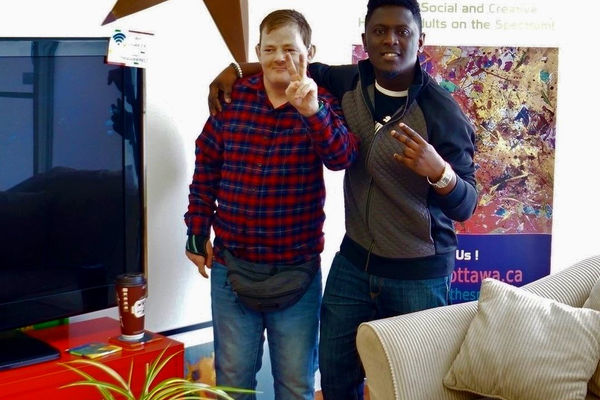
MTE team members meet with self-advocates to find out what is most important in life. On January 28, 2020, the team visited theSpace studio in Ottawa to hold a pop-up event open to the city's self-advocacy community — an opportunity to step outside the regular sessions and gather a wider range of voices for the documentary project.
Self-Advocacy: A Practice, a Movement
Self-advocacy rests on a fundamental principle: people with intellectual disabilities are the best experts on their own lives and have the right to speak for themselves, make their own decisions, and participate fully in their community. This movement, which gained momentum in Canada from the 1970s onwards, helped transform the way society perceives and treats people with disabilities — no longer as subjects to be managed, but as full citizens whose voices count.
For the MTE project, gathering perspectives from Ottawa's broader self-advocacy community was a way of grounding the documentary in a collective rather than individual reality. The stories of the project's participants are real and important in themselves. But they are also part of a larger context — one of thousands of people who have had similar experiences, and of a whole community that continues to fight for its rights.
What Is Most Important in Life?
The question posed at the pop-up event was simple and open-ended at the same time. The answers gathered from participants reflected common values: community, independence, family, friendship, health, being heard and respected. These responses were direct, personal, and often deeply tied to what the institutions historically denied to the people living in them.
Being heard is precisely what the institutional system did not allow. Its structures were designed to make decisions on behalf of people, not with them. The pop-up event was therefore in itself a political gesture: putting a microphone in the hands of people whose voices had been silenced for too long.
TheSpace itself — an inclusive arts venue in Ottawa that supports people with disabilities in creative practice — provided exactly the kind of setting this work called for. Its open-door policy and welcoming atmosphere made it easy for people to drop in, share a thought, and feel that their presence mattered.
A big thank you to everyone who came out and to theSpace for letting us use your beautiful studio!
Participants included:
- Dominic L'Heureux
- Robert Lamoureux
- Andy Golden
- Stéphane Boulanger and Sam Auguste
- Erin Delmage and Heather Kidd
- Gérard Robillard and Linda Charette
- Jessie Huggett
What These Conversations Bring to the Project
The responses gathered at the pop-up enriched the documentary's material by giving it a community resonance. The film does not only tell the story of one individual or a small group — it is situated within a broader social fabric, one of people who share values, aspirations, and often similar stories of struggle for recognition of their rights.
For the MTE project participants, conducting these interviews in the community also represented an important practical step: learning to ask questions of strangers, to listen closely, to operate a camera in a public space. These are skills that serve well beyond the documentary — they are the skills of any active citizen in their community.