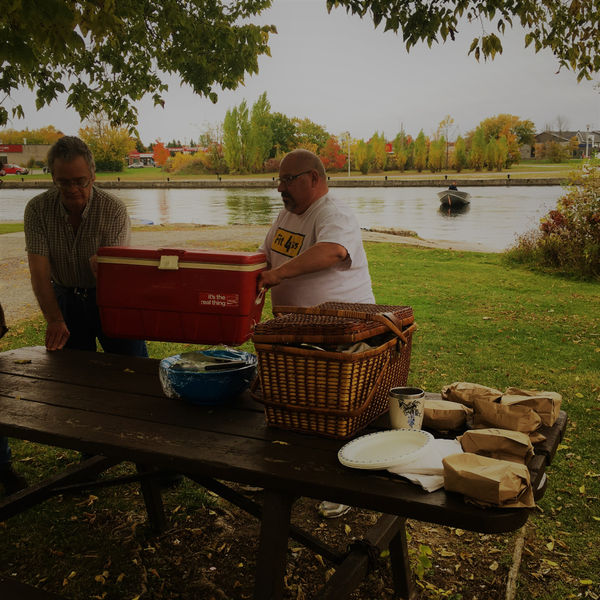
Enjoying the autumn weather in a park by the river. During our break, we spent a beautiful autumn afternoon in a park by the waterfront — a chance to relax, connect, and enjoy the season together as a group.
Choosing where to go
There is something quietly significant about a group of people deciding together where they want to spend an afternoon and then simply going there. For survivors of Ontario's large institutions, that kind of choice — unremarkable to many people — carries a different kind of weight. Inside institutions like Rideau Regional Centre, movement was largely dictated by schedules and routines set by others. Outings were organized events, not spontaneous decisions. The freedom to step outside when the weather is good, to pick a spot by the water, to sit as long as you like, belongs to the texture of a life lived on your own terms.
The park by the river gave the group that afternoon, and they took it fully.
What outdoor time offers
The research on the relationship between time in nature and overall wellbeing is extensive. Spending time outdoors — particularly near water, in green spaces, away from the hum of indoor settings — has measurable effects on mood, stress levels, and a sense of connection. For people who have spent significant portions of their lives in institutional or highly managed environments, access to open outdoor space carries additional meaning. It is a form of decompression, but also a form of belonging: belonging to the world as it is, in all its seasons.
October in Ottawa is particular. The leaves are turning, the air has that dry, cool clarity that doesn't last long, and the light falls differently. There is a short window each year when the parks along the river are exactly what they are that afternoon: an invitation to be present and unhurried.
Building the project between sessions
The Memory Witness and Hope project unfolds over many months, and what happens between formal sessions matters just as much as the sessions themselves. Community is not only built in studios or around tables — it builds in parks too, over shared food and easy conversation, when no one is performing or producing anything. These informal hours are where people come to know each other in the ways that make collaboration possible.
By the time the group gathers for their next session, they carry this afternoon with them. The friendships formed in moments like this one are part of what makes the storytelling work possible. Survivors sharing their stories with the world is difficult and courageous. It is easier with people beside you who know you, who have sat with you by a river in the autumn, who have simply spent time together without agenda.
It was a good afternoon. The kind that does not need to be documented, that does not need to produce anything, that earns its place in the record simply by having happened — a group of people who chose to spend time together, in a park, in the autumn, in the city where many of them have spent years reclaiming a life that institutions once took from them.